


Cape Verde 0–0 Saudi Arabia: how the Jarvis supercomputer's prediction held up
Nhipbong Analytics
Jarvis prediction desk

Cape Verde and Saudi Arabia shared the points in a goalless draw in Group H of the 2026 World Cup at NRG Stadium on June 26. Ninety minutes without a goal was a fair reflection of a tight, evenly matched contest between two sides rated as near equals, even if the Jarvis supercomputer model predicted the African side before kickoff.
- Cape Verde 0–0 Saudi Arabia, Group H of the 2026 World Cup, NRG Stadium, June 26.
- The match ended without a goal, with both defenses concentrated from the first whistle to the last.
- Before kickoff Jarvis rated Cape Verde to win at 37.3 percent, Saudi Arabia at 34.4 percent and the draw at 28.3 percent: the draw landed as the least likely of the three outcomes.
- Even though it missed the exact result, the gap of under 10 percentage points between the three scenarios shows Jarvis correctly read how balanced the tie was.
- Each side took a point, keeping alive their ambition of competing for third place in Group H.
| Outcome | Cape Verde | Draw | Saudi Arabia |
|---|---|---|---|
| Jarvis probability | 37.3% | 28.3% | 34.4% |
| Metric | Jarvis forecast |
|---|---|
| Expected total goals | 2.5 |
| Predicted score | 2–1 |
| Chance of 3+ goals | 45.6% |
Head to head: Jarvis prediction vs the actual result
| Category | Prediction (pre-match) | Actual | Correct? |
|---|---|---|---|
| Winner | Cape Verde (37.3%) | Draw (0–0) | ✗ Off |
| Predicted score | 2–1 | 0–0 | ✗ Off |
| Expected goals | 2.5 goals | 0 goals | ✗ Off |
| Chance of 3+ goals | 45.6% | None | ✓ Right |
Overview: a point shared at NRG Stadium


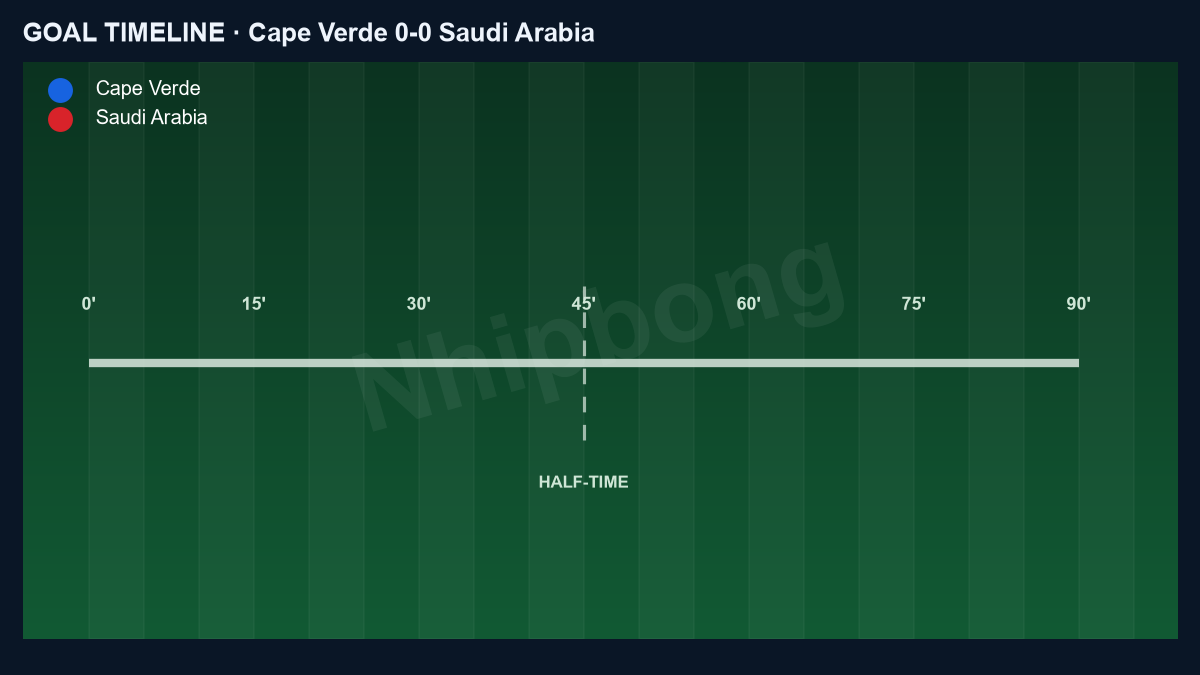
The meeting between Cape Verde and Saudi Arabia in Group H ended 0–0, a result that left both sides feeling a mix of regret and relief. With both teams targeting a fight for third place in the group, a point earned in such a tense, tightly wound contest is still valuable currency for the road ahead.
Before the ball rolled, the Jarvis supercomputer model produced a trio of probabilities that were rare in how close they sat: Cape Verde to win at 37.3 percent, Saudi Arabia at 34.4 percent, the draw at 28.3 percent. No scenario climbed above 40 percent, a sign that even the model found this a genuine puzzle. The way the match unfolded proved that caution entirely justified.
Cape Verde arrived with the confidence of the first World Cup point in their history, claimed against Spain, while Saudi Arabia brought the experience of a 2022 World Cup campaign under returning head coach Herve Renard. Those two currents of momentum collided and cancelled each other out over 90 minutes.
How it played out: 90 minutes belonging to two defenses
Not a single goal was scored across the whole match, and that says more than a round number ever could. Cape Verde stayed faithful to the approach that had helped them hold firm against Spain: a deep defensive block, compact spacing between the lines and a patient wait for the chance to counter. The midfield trio of Kevin Pina, Joao Paulo and Jamiro Monteiro took turns sealing the space in front of the back line.
On the other side, Saudi Arabia controlled the tempo with the greater weight of international experience, using Salem Aldawsari and Mohamed Kanno as their platform to build from. Yet the opponent's tight shape refused to give the Asian side the room they needed to create something out of the ordinary. As the game wore on, the caution only grew, with both teams fully aware of the price of a mistake at this stage of the group phase.
The result was a match in which the two goalkeepers, Vozinha and Mohammed Alowais, both kept clean sheets, while the crowd at NRG Stadium watched a genuine defensive chess match rather than a flood of goals.
Checking the Jarvis prediction: wrong result, right nature

Judged on the final result, Jarvis did not win this one. The model predicted Cape Verde at 37.3 percent, while the draw, the outcome that actually happened, was rated at just 28.3 percent, the lowest of the three possibilities. This is a miss that deserves to be acknowledged plainly.
But look deeper into the structure of the numbers and Jarvis was right about the thing that mattered most: the balance. The gap between the highest and lowest scenario was a mere 9 percentage points, a margin that says outright the model found no decisive advantage for either side, from their near identical FIFA rankings to the fact that neither team held an edge in home advantage or rest. A match quantified as fragile as that ending 0–0 is an outcome that sits entirely within the range of expectation.
The lesson: when Jarvis signals three near equal scenarios, that is itself a warning of a grinding, deadlocked contest, and a goalless draw is the complete embodiment of that warning.
The starting lineups
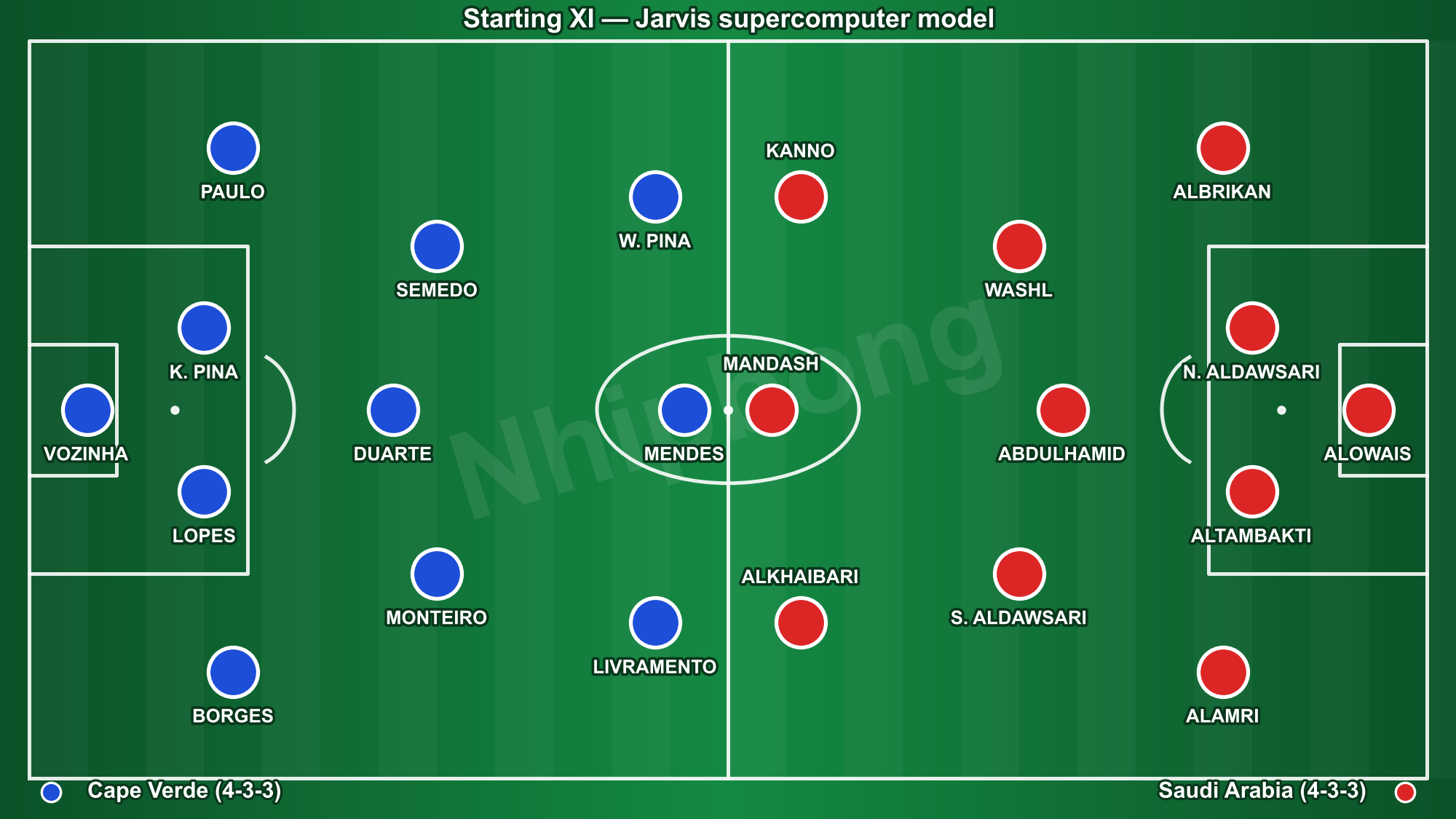
Cape Verde took the field with goalkeeper Vozinha (number 1) guarding the net. The defense featured Diney Borges (3), Pico Lopes (4) and Wagner Pina (24). The midfield was heavily manned with Kevin Pina (6), Joao Paulo (8), Jamiro Monteiro (10), Deroy Duarte (14) and Willy Semedo (17), while Dailon Livramento (19) and Ryan Mendes (20) led the attack.
Saudi Arabia handed the gloves to Mohammed Alowais (21). The back four consisted of Abdulelah Alamri (4), Hassan Altambakti (5), Saud Abdulhamid (12) and Nawaf Bu Washl (13). Nasser Aldawsari (6), Abdullah Alkhaibari (15) and Mohamed Kanno (23) manned the midfield, while up top was the trio of Feras Albrikan (9), Salem Aldawsari (10) and Sultan Mandash (20).
The two ways of arranging personnel clearly reflected the intent: Cape Verde piled numbers into midfield to choke off the space, Saudi Arabia kept a full three attackers to hunt for a breakthrough. In the end, the honors went to the defenses.
You can find more standout fixtures in our daily predictions hub.
Conclusion: a point, and the race still wide open
The 0–0 draw kept the tangled picture in Group H exactly as it was. Cape Verde extended their memorable run at their first ever World Cup with one more point, while Saudi Arabia, though still without a win, preserved their chances in the race for third place in the group.
For Jarvis, this was a match to revisit a core principle: the value of the model does not lie in nailing every scoreline, but in its ability to quantify precisely how balanced a tie is. The three numbers, 37.3 percent, 34.4 percent and 28.3 percent, told in advance the story of a game with no winner and no loser, and the pitch confirmed it. Nhipbong will keep following the journey of both teams through the rest of the group phase.
Frequently asked questions
What was the result of Cape Verde vs Saudi Arabia?
The final score was Cape Verde 0–0 Saudi Arabia. The teams shared the points.
Did the Jarvis supercomputer model predict this match correctly?
Before kick-off, Jarvis called a 2–1 scoreline and predicted Cape Verde to win at 37.3%. The actual result was 0–0, which differed from the prediction.
How many goals were scored in Cape Verde vs Saudi Arabia?
0 goals in total. Jarvis had expected around 2,5 goals before the match.
Who scored in this match?
No goals; both sides kept a clean sheet.