















Spain 1–0 Argentina: how the Jarvis supercomputer's prediction held up
Nhipbong Analytics
Jarvis prediction desk
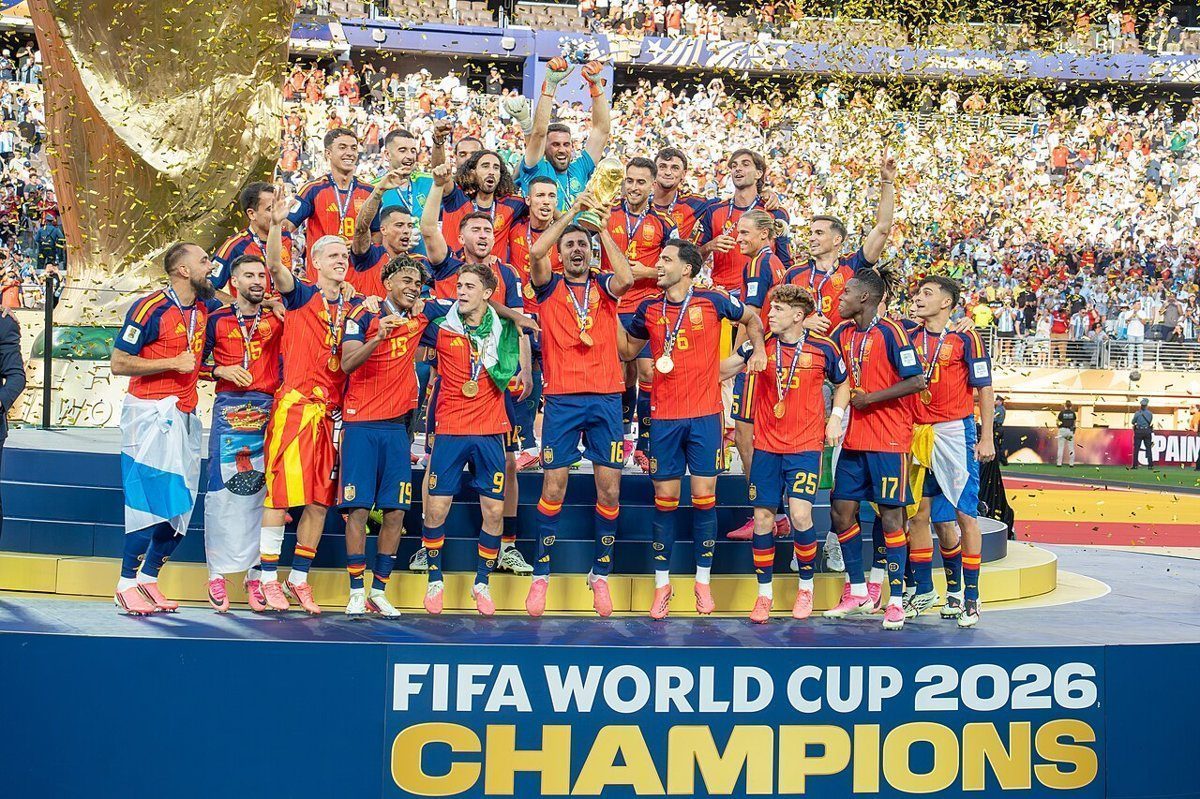
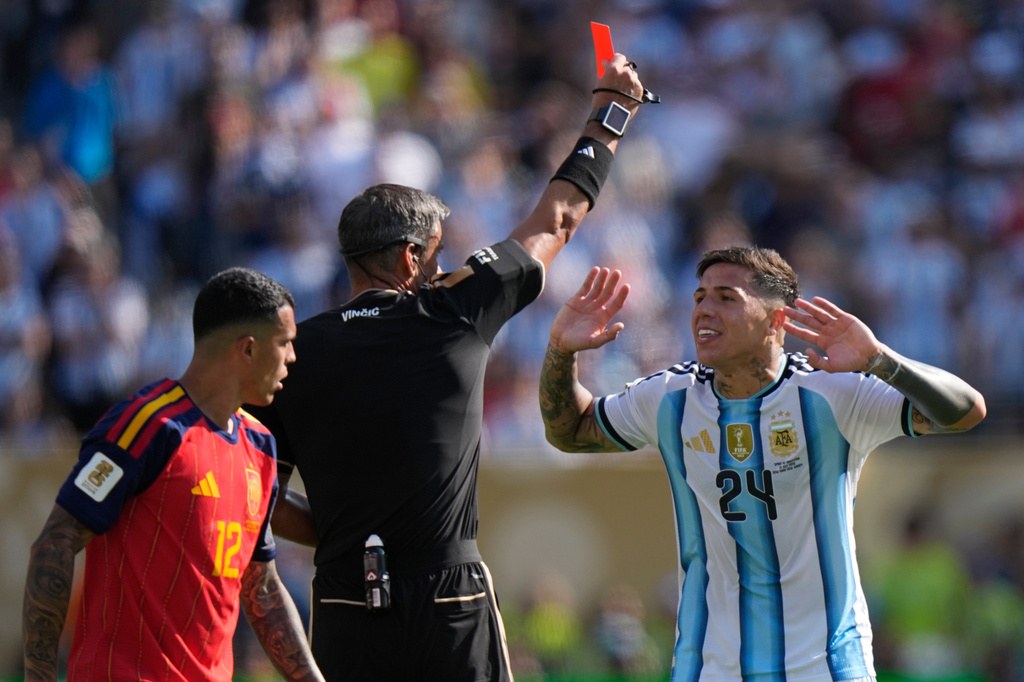
The clock read 90+3 when Enzo Fernández sank to the MetLife Stadium turf. Referee Slavko Vincic reached for a second yellow, then a red, and Argentina's World Cup final suddenly meant thirty more minutes with ten men. Before kick-off, the Jarvis supercomputer model had given Spain the edge at 42% to Argentina's 25%, with a draw on 33%, and pointed toward a 2–0 scoreline as its representative outcome. What actually arrived was leaner and colder: Spain 1–0, settled deep in extra time.
- Spain beat Argentina 1–0 after extra time to win the World Cup 2026 final at MetLife Stadium.
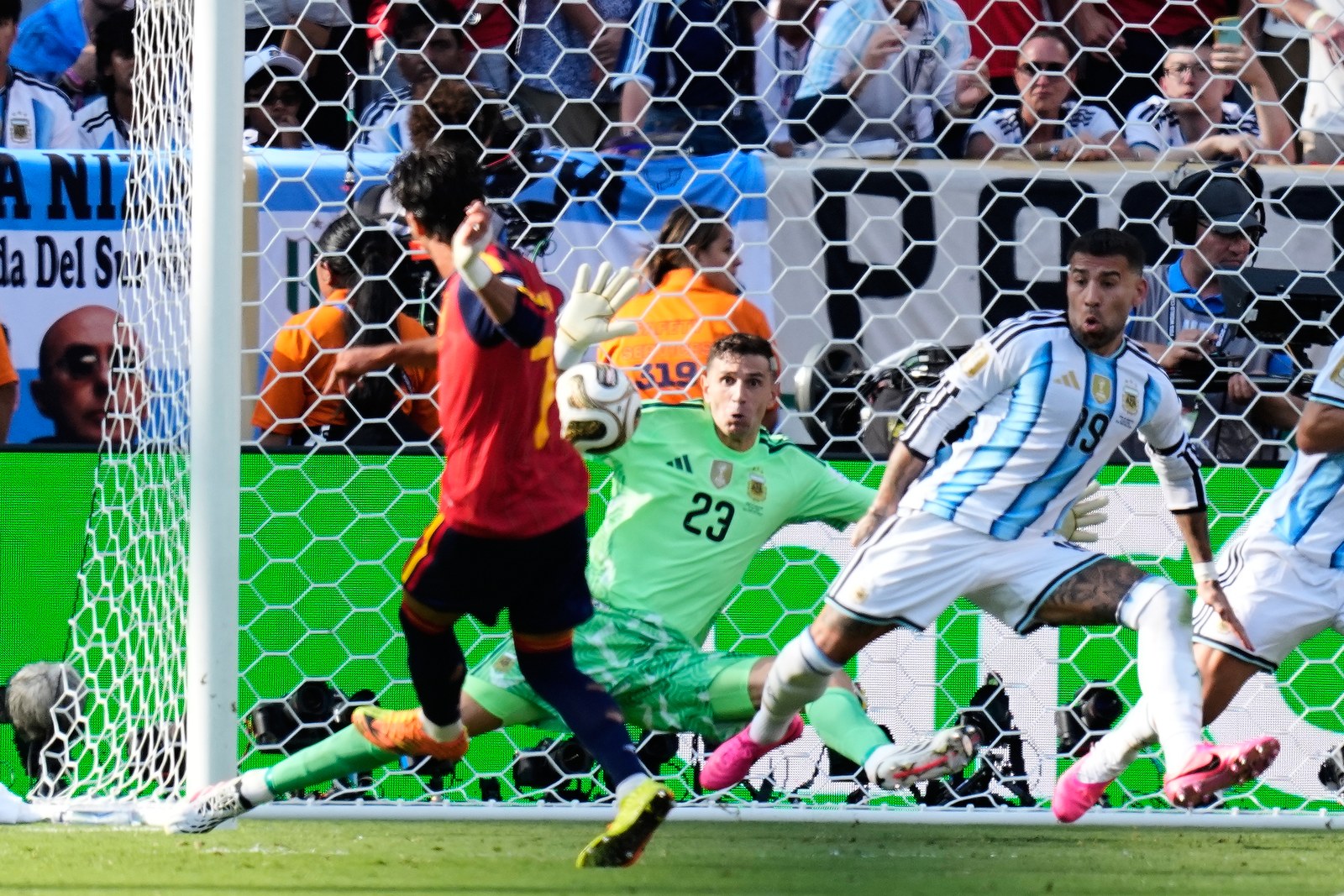
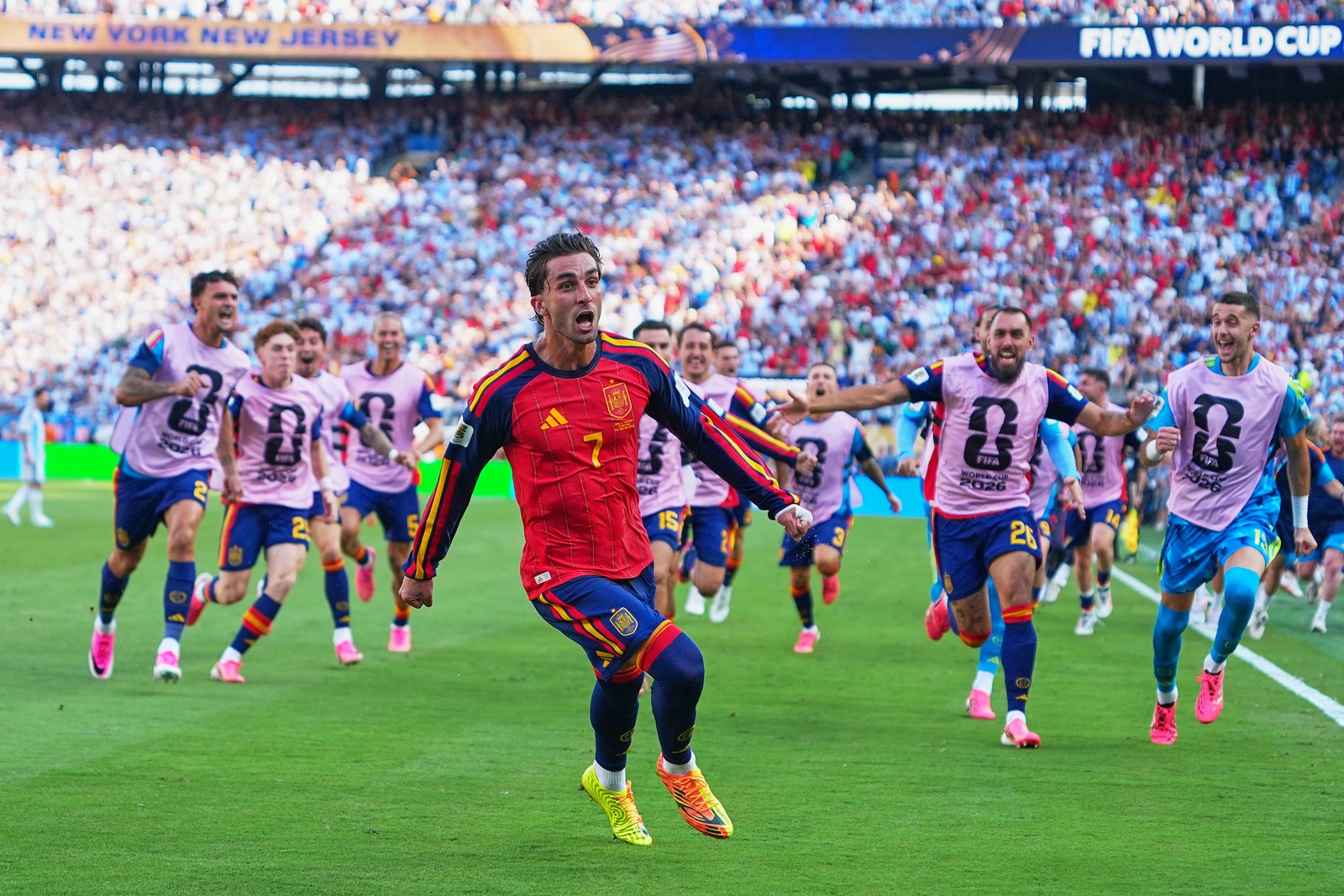
- Ferran Torres, on from the bench in the 62nd minute, scored the only goal in the 106th minute, set up by Nico Williams.
- Enzo Fernández was sent off for a second yellow card in the 90+3rd minute, leaving Argentina to play extra time with ten men.
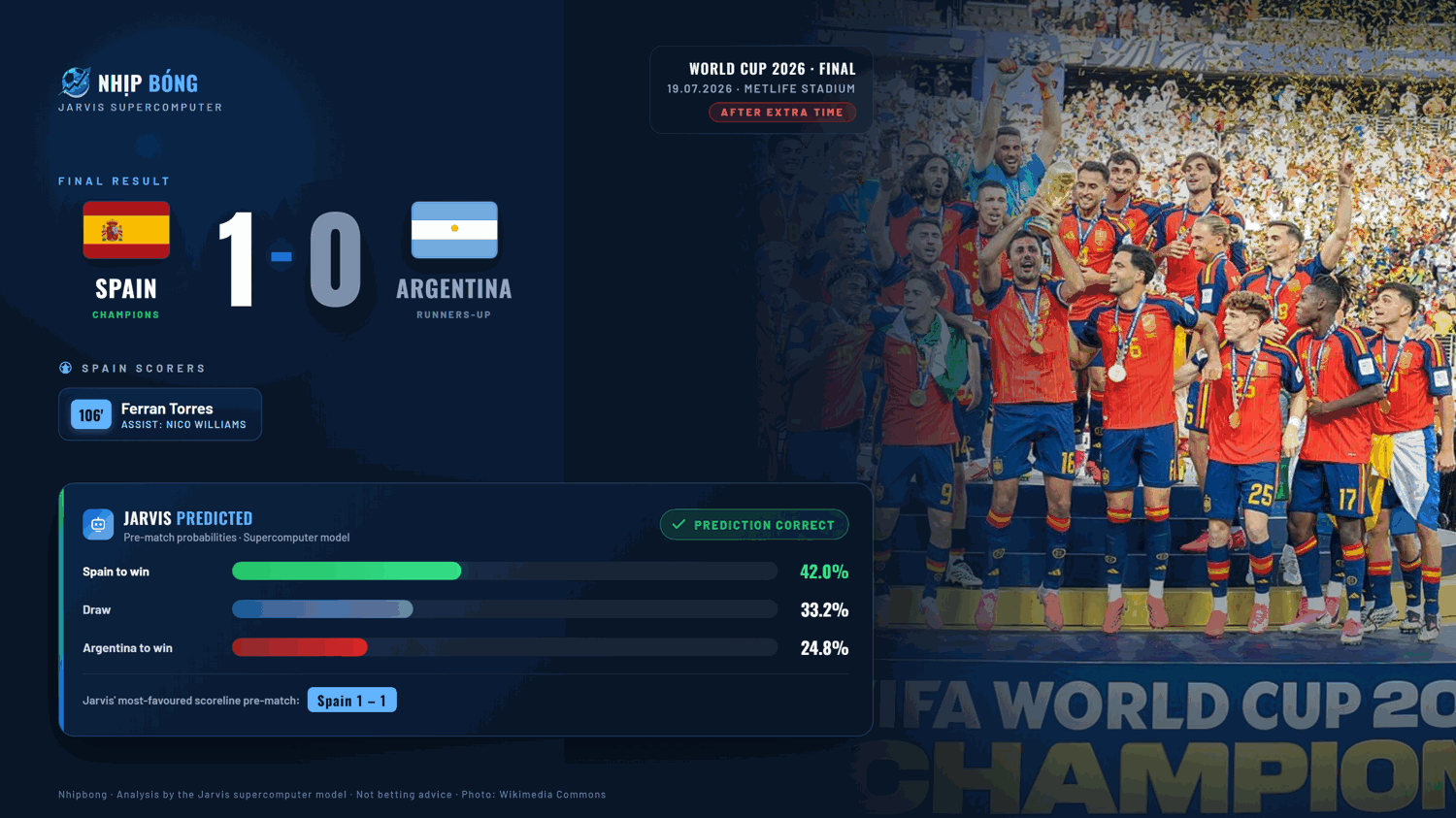
- Before kick-off, the Jarvis supercomputer model favoured Spain at 42% to Argentina's 25%, with confidence in the forecast rated low.
- It was only the second meeting between the two sides, after a 2018 friendly Spain won 6–1.
| Outcome | Spain | Draw | Argentina |
|---|---|---|---|
| Jarvis probability | 42% | 33% | 25% |
| Metric | Jarvis forecast |
|---|---|
| Expected total goals | 2.28 |
| Likely score | 1–1 |
| Chance of 3+ goals | 39.8% |
Head to head: Jarvis prediction vs the actual result
| Category | Prediction (pre-match) | Actual | Correct? |
|---|---|---|---|
| Winner | Spain (42%) | Spain (1–0) | ✓ Right |
| Representative score | 2–0 | 1–0 | ✗ Off |
| Expected goals | 2.3 goals | 1 goal | ✗ Off |
| Chance of 3+ goals | 39.8% | No | ✓ Right |
Minute 90+3 at MetLife Stadium: the red card that flipped the World Cup 2026 final
Thirty seconds before Slavko Vincic, the Slovenian referee, brought the ball back into play, MetLife Stadium in East Rutherford seemed to hold its breath. Ninety minutes of the World Cup 2026 final had produced nothing but a blank scoreline, and then, in the third minute of stoppage time, Enzo Fernández picked up his second yellow card and walked off under half a stadium's jeers. Argentina, who had played their way through the tournament with the swagger of defending champions, suddenly faced extra time with only ten men.
Half an hour of tense football later, Spain closed out their coronation with the narrowest possible scoreline, 1–0. A final that many had expected to be a shootout produced exactly one goal, and it came in the 106th minute of extra time.
Ferran Torres, minute 106: the goal built by a substitute who entered for Oyarzabal in the 62nd minute
The story really began in the 41st minute, when Lisandro Martínez picked up a yellow card. Three minutes later, Lionel Scaloni had seen enough and pulled him off, sending on Nicolás Otamendi to head off any risk of losing a man early. Argentina's game plan had to be rewritten from minute 44 onward, and that caution followed them for the rest of the night.
The pressure kept building. In the 52nd minute, Paredes, only just on for the second half, was booked too, and Argentina's back line started playing with one eye on the referee. Luis de la Fuente answered by loading up his attack: in the 62nd minute, Spain sent on both Pedri and Ferran Torres together, refreshing midfield and the front line in one move. It would take almost another hour for that substitution to pay off.
The closing stages of normal time passed in a tense stalemate. Then, in the 83rd minute, the real turning point arrived: Enzo Fernández picked up his first yellow card. He played the rest of the half with a card hanging over him, and in the third minute of stoppage time, in a fresh challenge, the second yellow came out. Argentina lost a man right at the door of extra time, about as cruel a moment as there is.
With the extra man, Spain pushed forward through extra time and struck when it mattered. In the 106th minute, Nico Williams carried the ball down the flank and squared it for Ferran Torres, on since the 62nd minute, to arrive and finish, the only goal of the game, 1–0. In the 111th minute, Alexis Mac Allister picked up a yellow card in Argentina's last push for an equaliser, but by then the door had already closed on the runners-up.
Jarvis leaned 42% Spain, matched against the real 1–0 scoreline
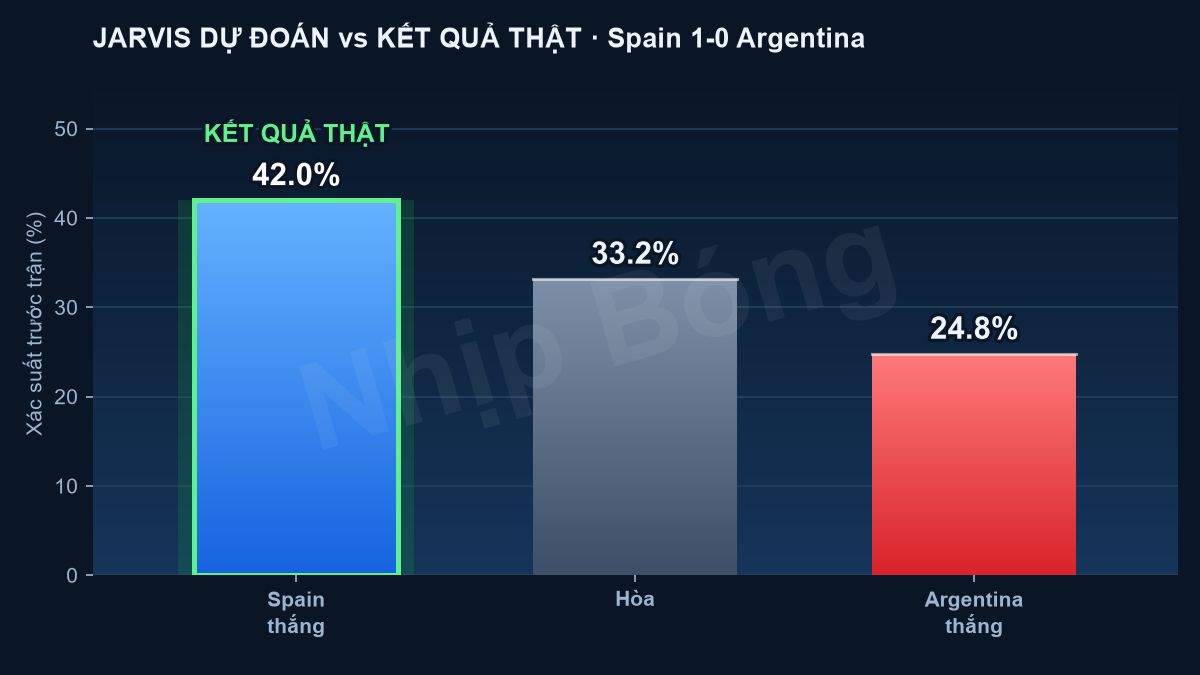
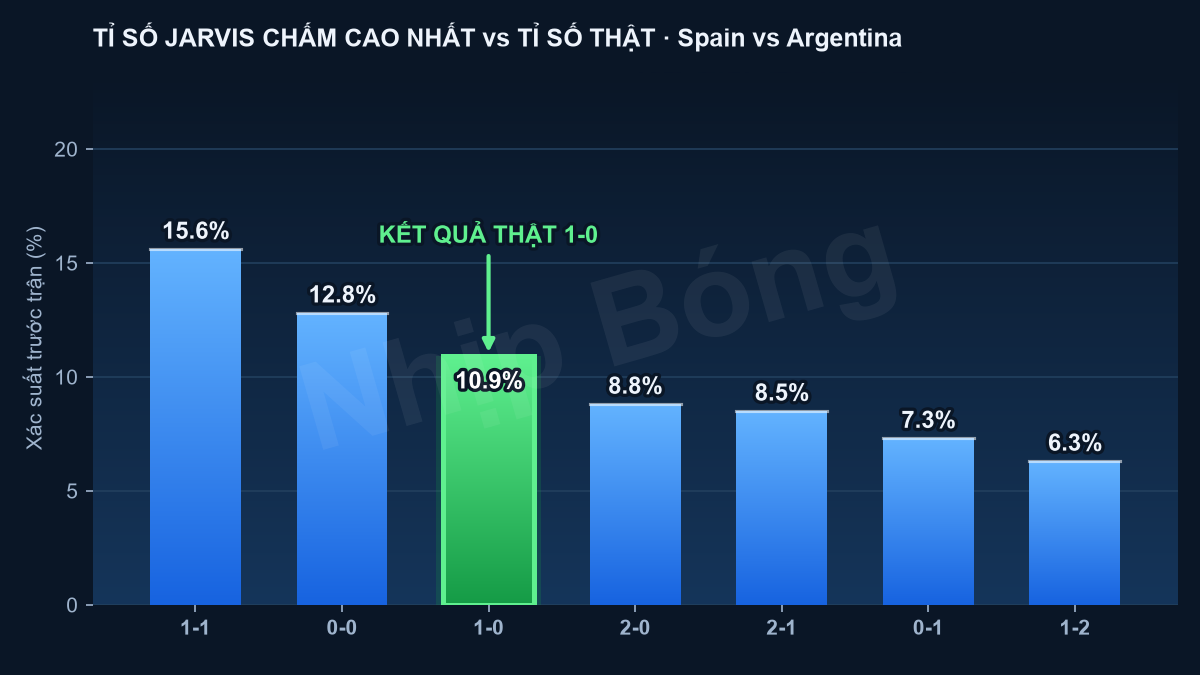
Before a ball was kicked, the Jarvis supercomputer model had marked Spain as the stronger side, giving them a 42% chance of winning, against 33% for a draw and 25% for Argentina. The gap between those three numbers was never huge, which fit a final where neither team looked clearly superior on paper.
The scoreline the model pointed to most, described as a representative score rather than the single most likely result, was 2–0 to Spain. Total expected goals for the match were set at 2.2785, and the chance of the game producing three goals or more was put at 40%. Notably, Jarvis tagged its own confidence in this forecast as low, marking it out as one of the hardest matches in the system to call.
Measured against what happened, the model's lean was right, Spain lifted the trophy. But the way the match unfolded sat some distance from the rest of that probability picture: the real scoreline was just 1–0, well short of the 2–0 representative score and nowhere near the 2.2785 expected-goals total, and the 40% chance of three or more goals never materialised. If anything, the low-confidence label Jarvis attached to this game turned out to be the most accurate part of the forecast, a final strangled by a red card and defensive resolve, exactly the kind of result that resists being boxed into probabilities.
Why Spain kept four clean sheets in five games, while Argentina played a man short
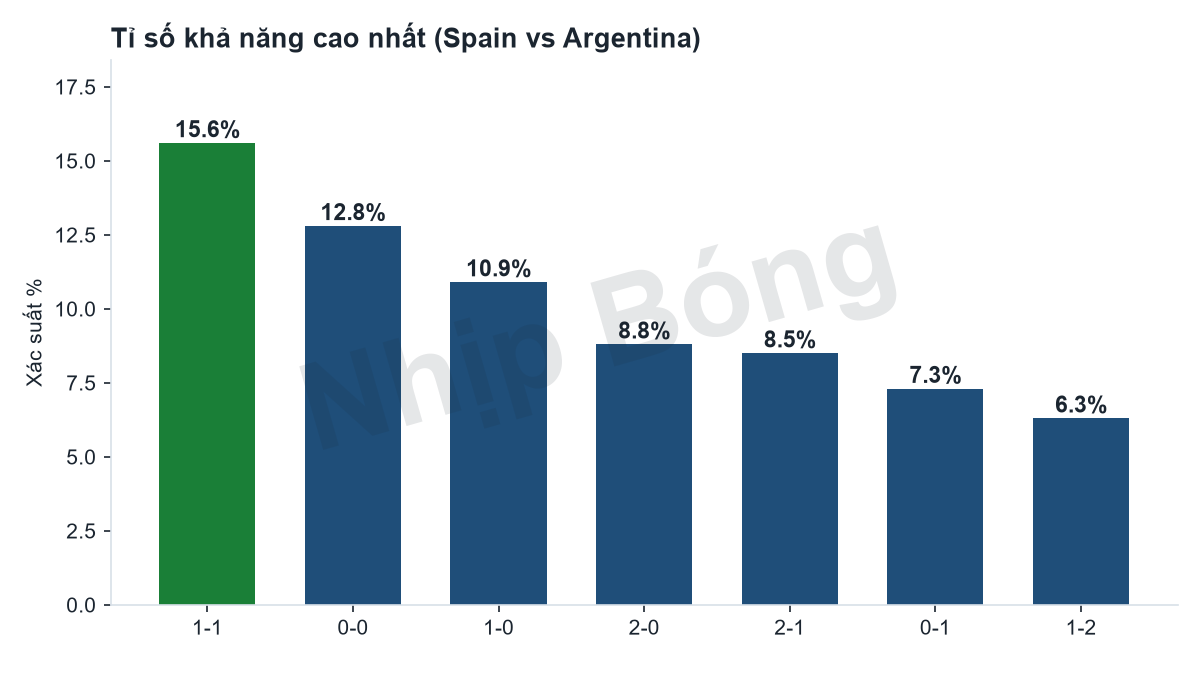
Looking back over the run-in, Spain arrived at the final on a five-match winning streak, and across that stretch Luis de la Fuente's defence conceded only once, against Belgium (2–1). Austria, Portugal, France and now Argentina were all kept off the scoresheet entirely, the clearest sign of just how hard this Spain side had become to break down. That record was the foundation that carried Spain through a final that was never comfortable.
Argentina, by contrast, arrived at the biggest game of the tournament on a run stacked with goals, seeing off Cape Verde, Egypt, Switzerland and England on the way, eleven goals in four matches at close to three a game. That kind of open football needs both legs and freedom up front, and Argentina lost both the moment Enzo Fernández walked off in the 90+3rd minute. Playing a man down through the whole of extra time, Scaloni had to sacrifice an attacking option, sending on centre-back Marcos Senesi in the 102nd minute for Julián Alvarez to shore up the defence, just as Spain were throwing on their freshest legs from the bench.
Ferran Torres and Nico Williams, who came on in the 62nd and 75th minutes respectively, were the two names who decided the match in the 106th minute. That is the difference between Spain's changes, made to attack, and Argentina's, made to cope with a man down after the red card. Worth noting too, this was only the second time the sides had met, after a 2018 friendly Spain won 6–1; this time the gap was just one goal, but it was still enough to lift the trophy.
A title written by the feet of substitutes
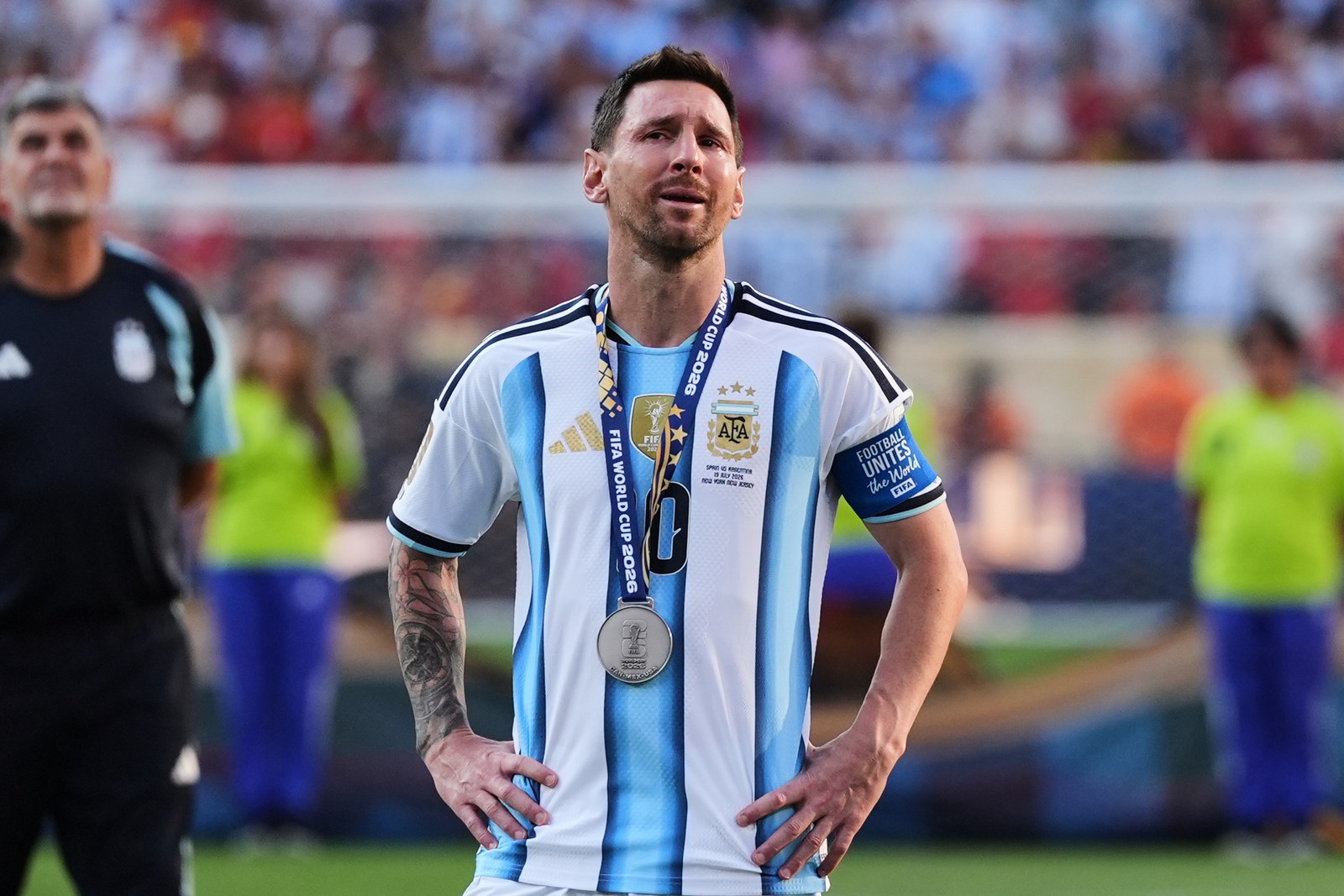
The final ended nothing like anyone would have pictured at kick-off: not a flood of goals like both sides had produced on their way here, but a red card and a passing move between two substitutes. For Spain, this title was built on squad depth and a defence that was nearly impossible to break down all tournament. For Argentina, the night at MetLife Stadium closed with Lionel Messi and his teammates watching the dream slip away in about the cruellest way there is, decided by one refereeing call deep in stoppage time. I keep coming back to that image: Messi still out on the pitch as the final minutes drained away, no expected-goals column can really capture how that moment felt. Football, in the end, is sometimes settled not by ninety brilliant minutes, but by the exact instant a card comes out of a pocket.
Data sources and disclaimer
Every detail here on lineups, form, goals, cards and substitutions has been gathered and checked against international football data; the probabilities and pre-match numbers were produced by the Jarvis supercomputer model. This is statistical analysis, not betting advice.
Frequently asked questions
What was the final score as Spain won the World Cup 2026 final against Argentina?
Spain won 1–0 after extra time, with the only goal scored by Ferran Torres in the 106th minute, assisted by Nico Williams.
Why did the final go to extra time?
Because the 90 minutes of normal time ended level at 0–0, so the two sides had to play two periods of extra time to settle it.
Who was sent off in the World Cup 2026 final?
Argentina midfielder Enzo Fernández picked up a second yellow card in the 90+3rd minute and was shown red, leaving his side to play the whole of extra time with ten men.
What did the Jarvis supercomputer model forecast for this match before kick-off?
Jarvis rated Spain the stronger side at 42%, with a draw at 33% and Argentina at 25%; total expected goals were set at 2.2785 and the forecast's confidence was rated low.
Had Spain and Argentina played each other before?
Yes, the two sides had met exactly once before, in a 2018 friendly that Spain won 6–1; the World Cup 2026 final was only their second meeting.